
Take that
Nick Hayek fights back, Swiss tax hikes and two men of note
Dear Insider,
Fighting does not sit well in the Swiss nature.
(Neutrality and all that, you know…)
But there are moments when time, circumstances and the national need dictate that a country must stand up and defend itself.
The same goes for companies.
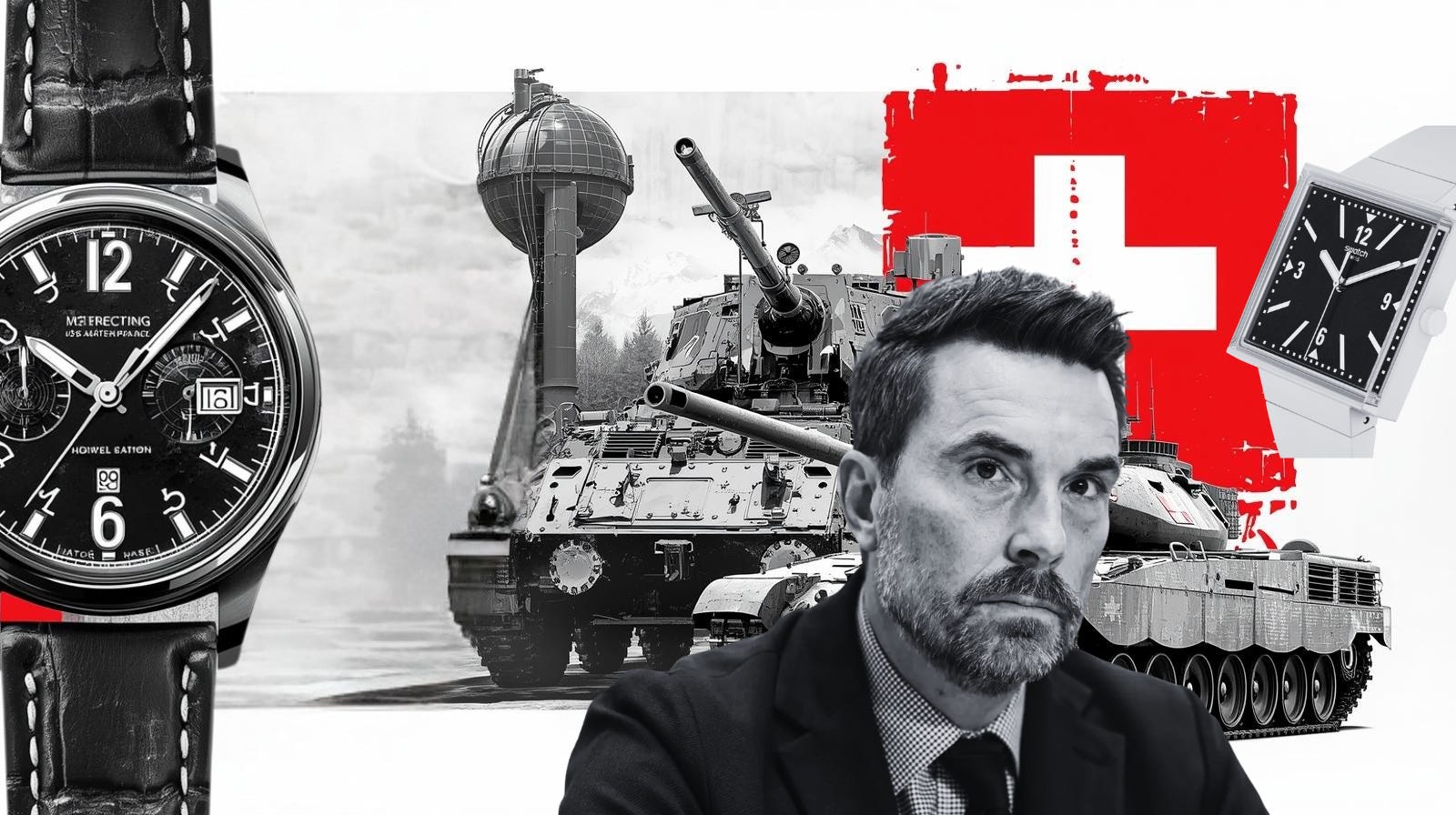
This week, newly-elected Federal Councillor Martin Pfister stepped up to announce two appointments that indicate a more proactive approach to Swiss military (and intelligence) affairs.
Nick Hayek would be proud…
Enjoy,
Ian
💥Quick coverage
The news, compressed - but not compromised…
It pays to work - daily
Does it pay to work? It might…
Switzerland’s Free Democratic Party (FDP) has reignited a polarising debate with a proposal to grant full-time workers a 7,000 CHF tax deduction—a move its proponents argue is necessary to correct a perverse incentive.
In a country where progressive taxation, social benefits, and high wages often make part-time work more financially appealing, full-time employees can feel penalised for their contribution.
Proponents such as Raphaela Birrer, editor-in-chief of the Swiss daily Tagesanzeiger, contends that such a deduction would not only ease the financial burden on those working 100% but also address labour shortages, bolster social security, and reduce reliance on foreign workers.
Critics, however, dismiss the plan as a relic of the 1950s, one that reinforces outdated gender norms and ignores the realities of modern life.
With nearly 40% of Swiss workers now employed part-time—women three times more likely than men to choose reduced hours—the FDP’s tax break could inadvertently signal that part-time work is second-class.
Time to fight
Nick Hayek is having fun…
The Swatch patron - after proposing an export tax on Swiss gold being sent to the US - has come up with another way to fight Donald Trump’s tariffs.
This week his Swatch Group launched a limited-edition watch cheekily titled “What if… tariffs?”.
In classic Swatch style, the protest comes with wit: the dial deliberately swaps the digits three and nine, turning “93” into “39,” while the back carries a small percent sign—a nod to tariff mathematics.
Priced at CHF 139 and sold only in Switzerland, the watch was snapped up online in less than 48 hours, with remaining pieces scattered across 11 stores.
Swatch says the product will disappear the moment tariffs are rolled back, underscoring its role as a symbolic, time-limited protest.
Boom confirmed
This is the week…
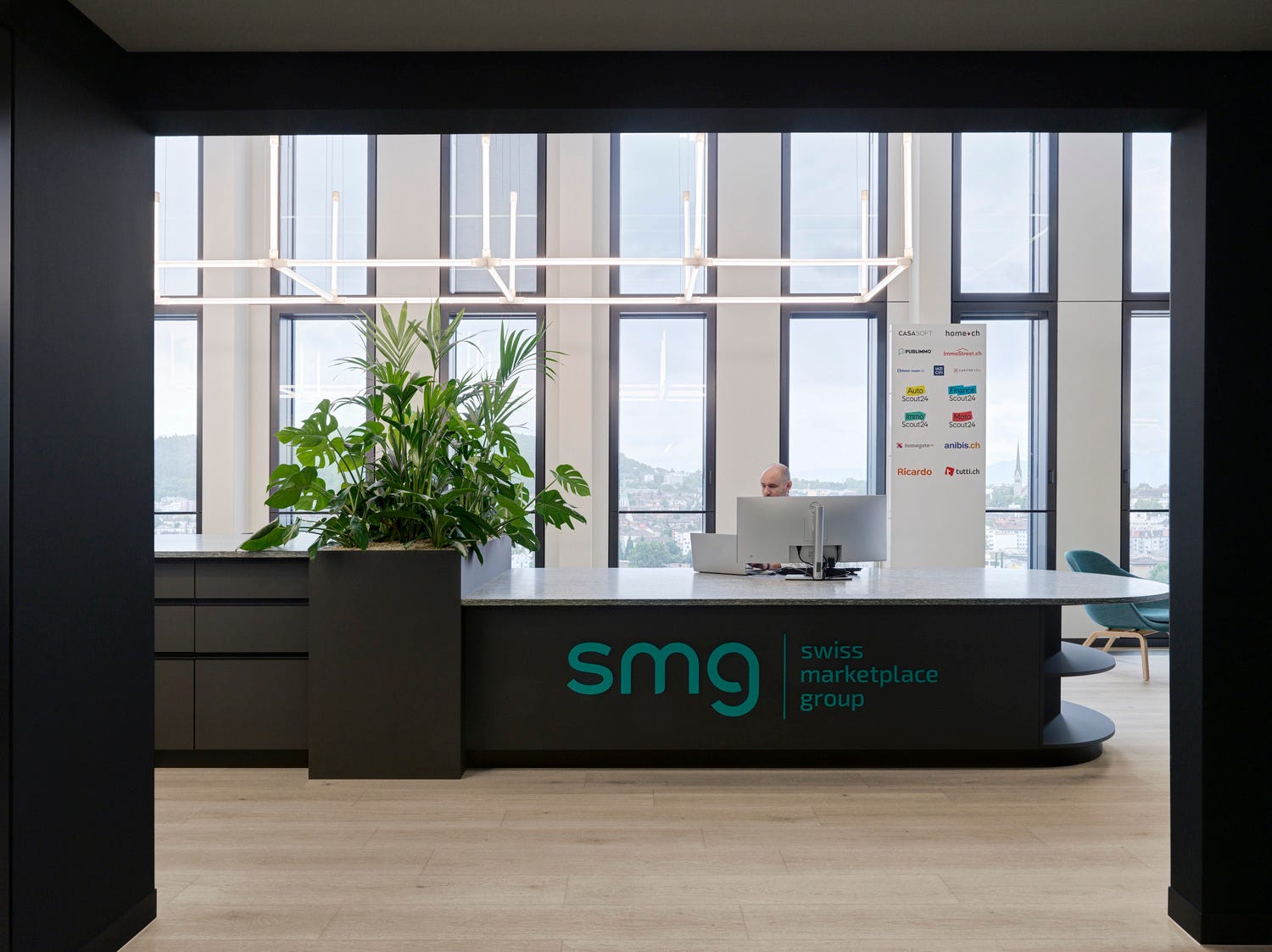
The Swiss Marketplace Group (SMG) — owner of Homegate, Autoscout24, Ricardo, ImmoScout24, Tutti, and Moneyland — is heading to the SIX Swiss Exchange on 19 September.
The IPO will be one of the largest in Switzerland in years, with a targeted valuation between CHF 4.2 and 4.5 billion.
Shares are priced in the CHF 43–46 range, translating to a free float of roughly 20–23%. Global coordinators are Goldman Sachs, J.P. Morgan, and UBS.
If successful, SMG’s listing could reshape Switzerland’s digital economy and serve as a bellwether for the country’s IPO market, which has been relatively subdued in recent years.
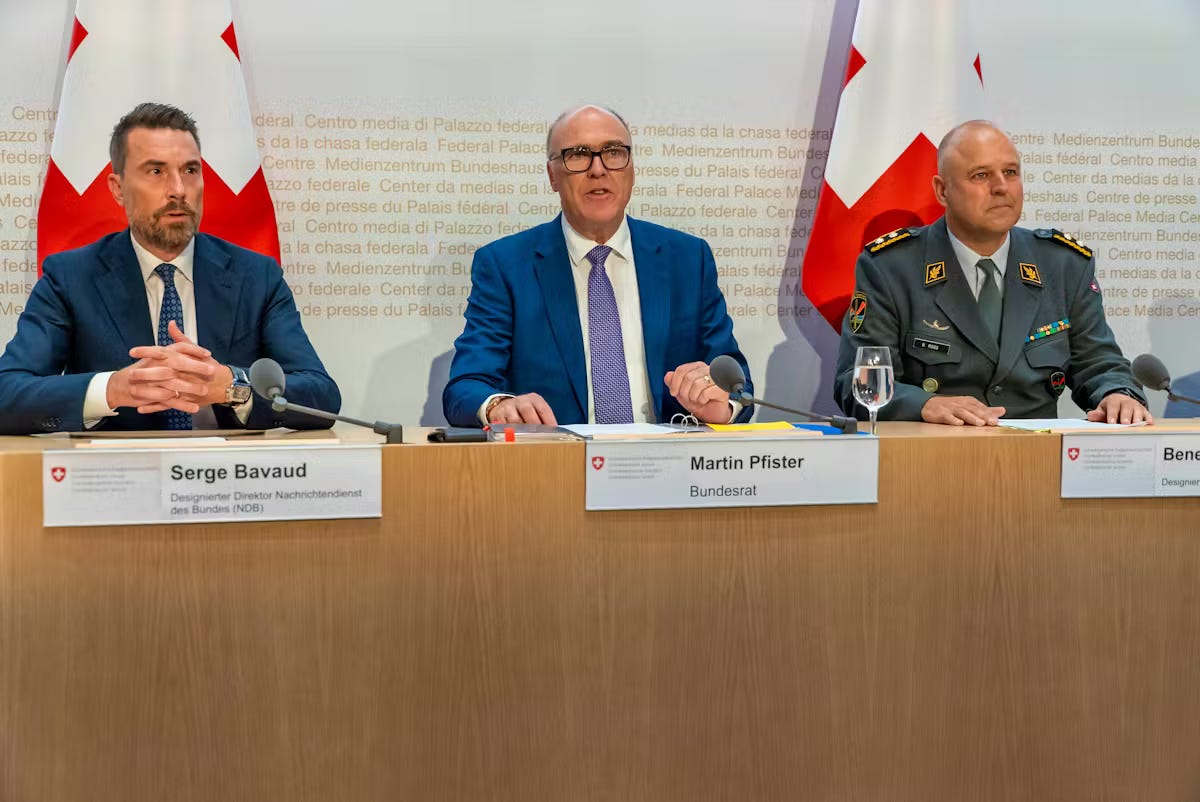
Person(s) in the News - Benedikt Roos & Serge Bavaud
Defence Minister Martin Pfister has had his hands full. After taking over from Viola Amherd, the Center politician has had to deal with multiple tricky situations - not least those involving key personnel.
Now he is trying to remedy the situation.
Pfister annoucned this week that he has appointed Benedikt “Bänz” Roos as the new Army Chief, replacing Thomas Süssli, effective 1 January 2026.
Roos is currently a Divisionär leading the Army’s land forces, and will be promoted to Corps Commander. Known for his pragmatic leadership, Roos has a background in planning and senior staff roles, and holds a master’s degree from ETH Zurich in Security Policy & Crisis Management.
Meanwhile, the Swiss Federal Council has also named Serge Bavaud to become Director of the Federal Intelligence Service (NDB) as of 1 November 2025, replacing Christian Dussey who leaves at the end of the year.
Bavaud was recently appointed ambassador to Algeria, and the new NDB role adds a domestic security leadership component.
The NDB has recentl faced internal upheaval due to organizational changes and low morale. Dussey’s resignation was due to be accompanied by a transition period extending into 2026.
Now Bavaud is expected to take over much earlier.
Needless to say - he will have his hands full.
Who pays?
Swiss parliamentarians reach a verdict - kind of
Switzerland’s promise of a 13th AHV pension starting in 2026 just hit reality.
The big question is: who’s going to pay for it? This week the National Council gave its answer: everyone
The extra pension payment should be financed by a 0.7% VAT hike — lifting the rate from 8.1% to 8.8% until 2030.
The solution is a quick fix - and only works to raise the CHF 4–5 billion needed each year. Other ideas — higher wage contributions, a retirement age increase — were floated, but voted down.
The politics were messy.
The middle-left wanted a shared burden between VAT and wages.
The centre-right (FDP and SVP) pushed to delay tough choices until the 2030 AHV reform.
In the end, a cross-party deal pushed the VAT solution through: 110 in favour, 86 against, 2 abstentions. Even a few French-speaking SVP members broke ranks to support it.
But the fight isn’t over.
The federal government will still need to find another CHF 900 million annually. And the Council of States will have its say this winter.
But the bigger question remains: is a temporary tax tweak enough to fund a pension system under massive demographic strain — or just another Swiss compromise that buys time until the next crisis?
The Bonus
🌶 Hot stuff - Swiss retailer Migros was forced to recall a significant batch of spices in its assortment due to fears of salmonella. (Link)
👎🏻 Not the right climate - Due to continued pressure from oversees - in other words, the USA - Swiss re-insurer Swiss Re has decided to withdraw from the recently adopted climate standard. (Link)
🔌 Down with that - New figures indicated that a majority of Swiss households will face lower energy prices in the hear future - with the exception of Canton Lucerne. (Link)