
Catch up
Swiss-EU relations, On (and Temu) post big numbers, a tiny bank shines
Dear Insider,
Numbers often tell a stark story: profit/loss, revenue, unemployment
When it comes time to tell the public where you stand, companies stand in the bright spotlight of truth…with little room to hide.
That was painfully obvious this week as Defence Minister Martin Pfister sat before the media on Friday. Nothing seems to add up for the Swiss military…
F-35s are too expensive
Patriot systems are too slow
Tax hikes are too high
On the other hand, numbers sometimes tell a deceiving tale. When revenue shoots up and sales go through the roof - not everything is as rosy as it seems.
In both cases, there is a lot of catching up to do.
Read more in this week’s edition…
🗞️ In short
What’s happening - shortly summarized
Rapid rise
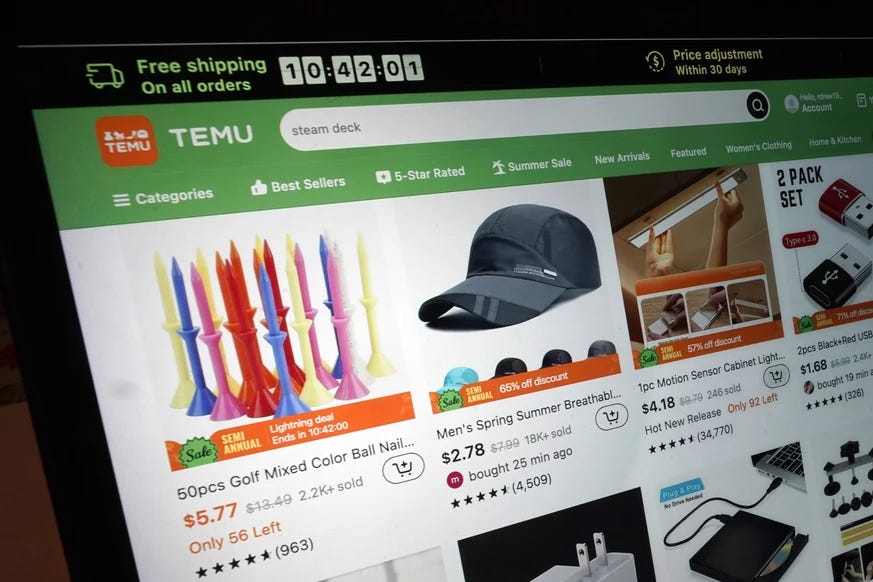
The flood of Chinese goods into Europe is hitting Switzerland as well.
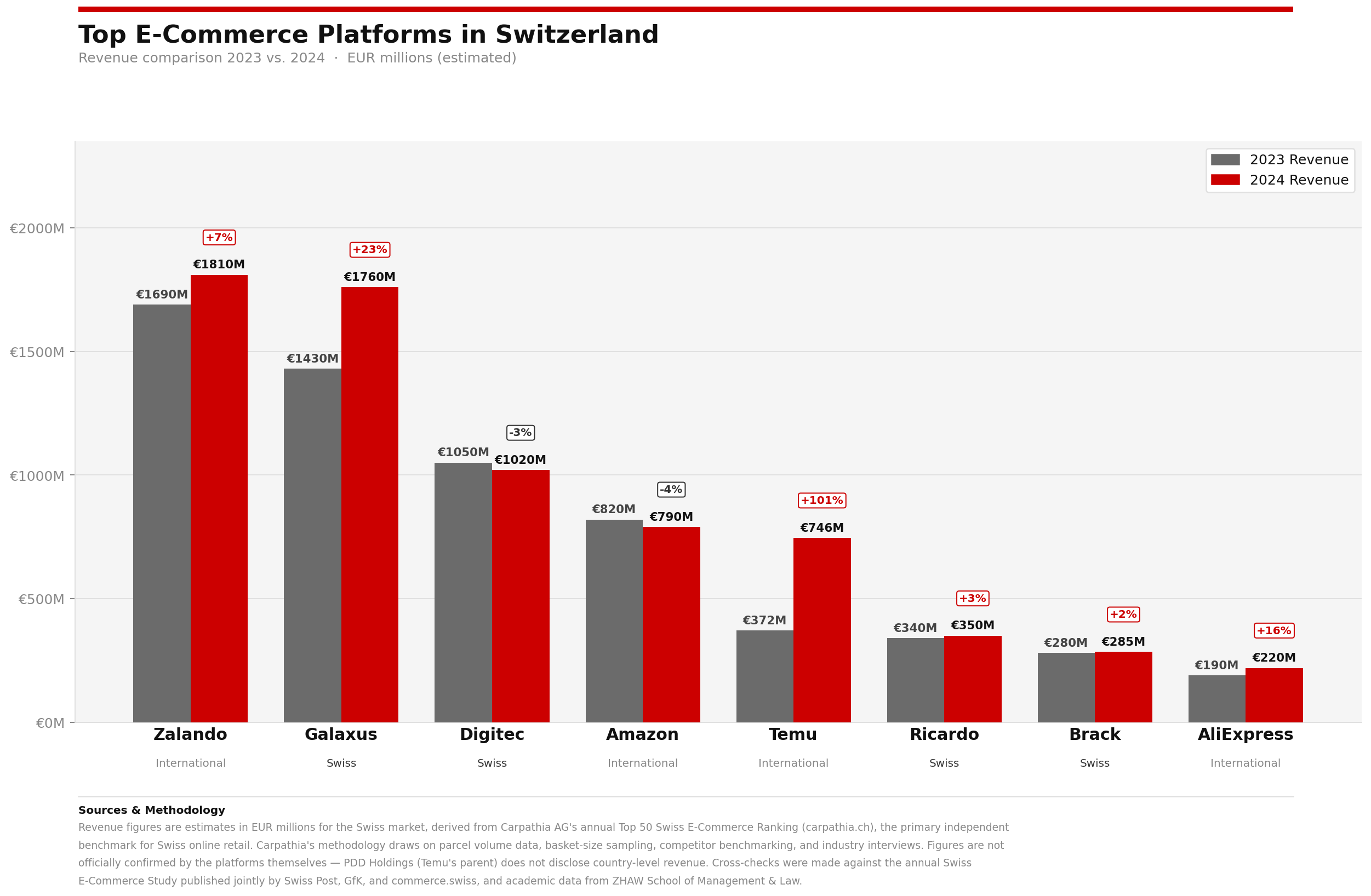
The Chinese shopping platform Temu, which launched in Switzerland in spring 2023, has crossed the one-billion-franc revenue mark in the Swiss market in 2025.
This represents a roughly 40% increase over 2024, when it already reached an estimated 700 million francs in sales.
According to the Winterthur consulting firm Carpathia, this growth was driven not just by a high volume of orders — estimated at over 50,000 per day — but also by Swiss consumers placing larger individual orders, suggesting growing customer loyalty.
This milestone puts Temu among the top five largest e-commerce players in Switzerland, behind Zalando, Galaxus, Digitec, and Amazon.
The platform has nonetheless drawn criticism, both for its opaque pricing model and for declining to participate in Switzerland’s established recycling fee system.
Small but growing
One bank in Switzerland is proving that you don’t have be huge to be appreciated.
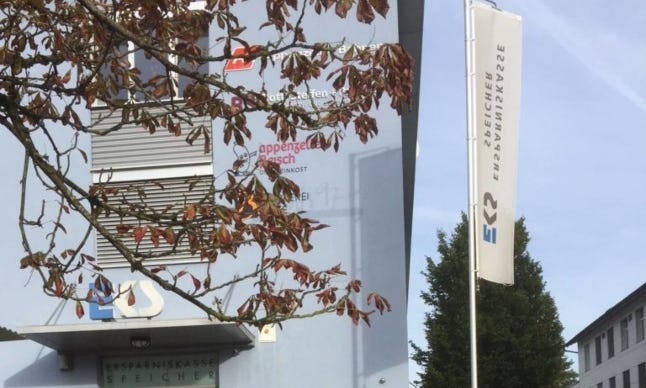
Switzerland’s smallest bank, Ersparniskasse Speicher in Canton Appenzell, boosted its 2025 net profit by 19% to CHF 222,377, with its balance sheet growing to CHF 80.7 million.
The boutique lender retained and attracted new mortgage clients by passing on SNB rate cuts, offering three-year fixed mortgages at just 1.15% by year-end.
Size, it seems, does not always matter so much…
Signs of the times
Switzerland has long been neutral - whatever that may mean.
But there are signs that Switzerland’s long-standing tradition is facing its most significant realignment in decades - with its largest neighbour, the European Union.
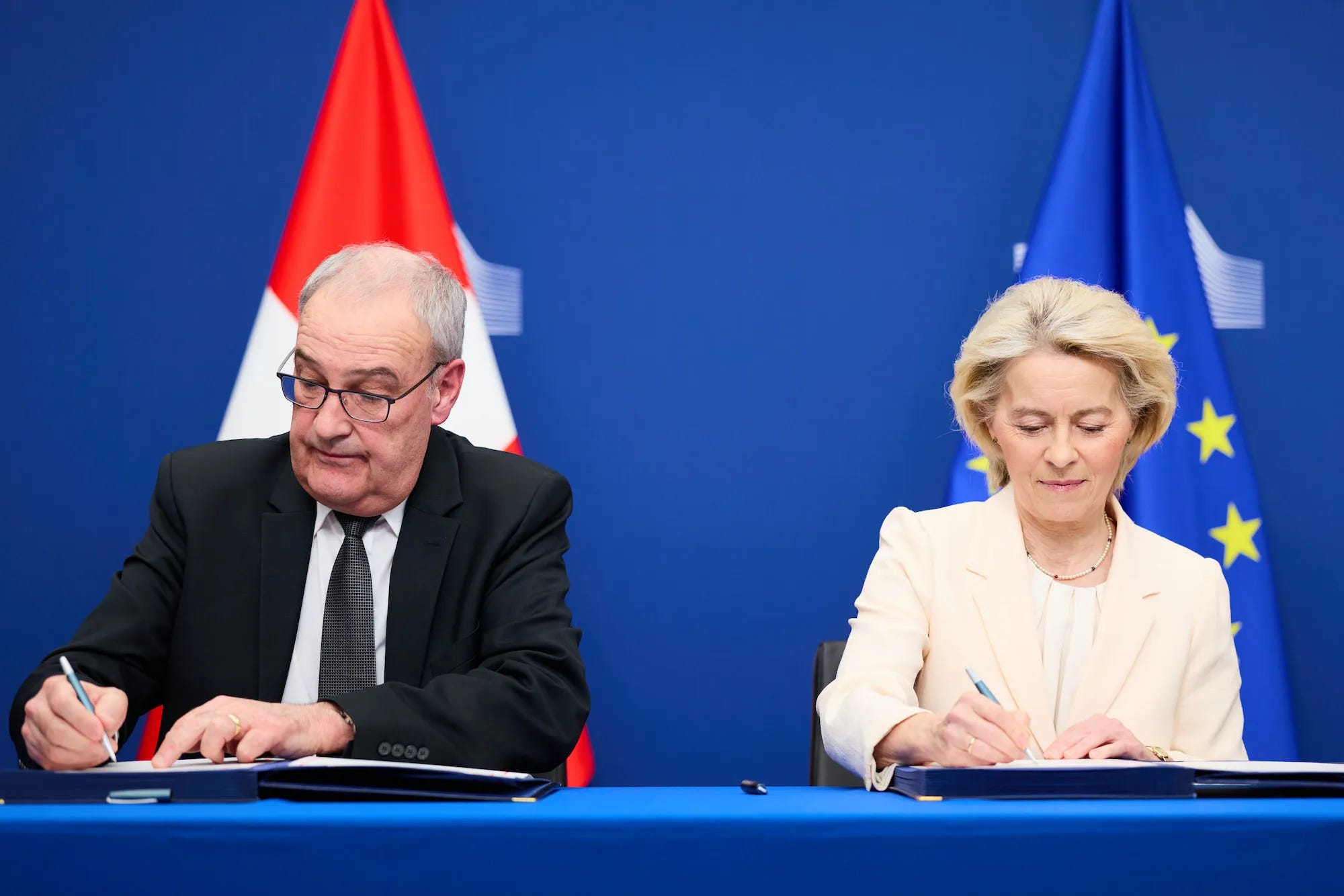
On March 2nd, Swiss President Guy Parmelin and EU Commission President Ursula von der Leyen signed a sweeping new bilateral treaty package in Brussels.
The agreement—dubbed “Bilaterals III”—updates and expands cooperation in areas such as electricity, food safety, and health, while introducing new institutional mechanisms to ensure Swiss laws dynamically align with evolving EU regulations.
This marks a sharp departure from the static, case-by-case approach of previous accords.
It signals Bern’s willingness to embed itself more deeply in the EU’s regulatory orbit—despite domestic political resistance from the Swiss People’s Party (SVP), which decried the move as a “submission treaty”.
(The agreement will come up for a referendum vote before long…)
Just days later, Justice Minister Beat Jans inked a separate deal with the EU on the exchange of passenger name records (PNR), enabling systematic sharing of air travel data between Swiss and EU authorities for security purposes.
The agreement, which mirrors EU internal standards, will see Swiss airlines transmit passenger information to EU member states, and vice versa, with both sides committing to reciprocal data processing and strict privacy safeguards.
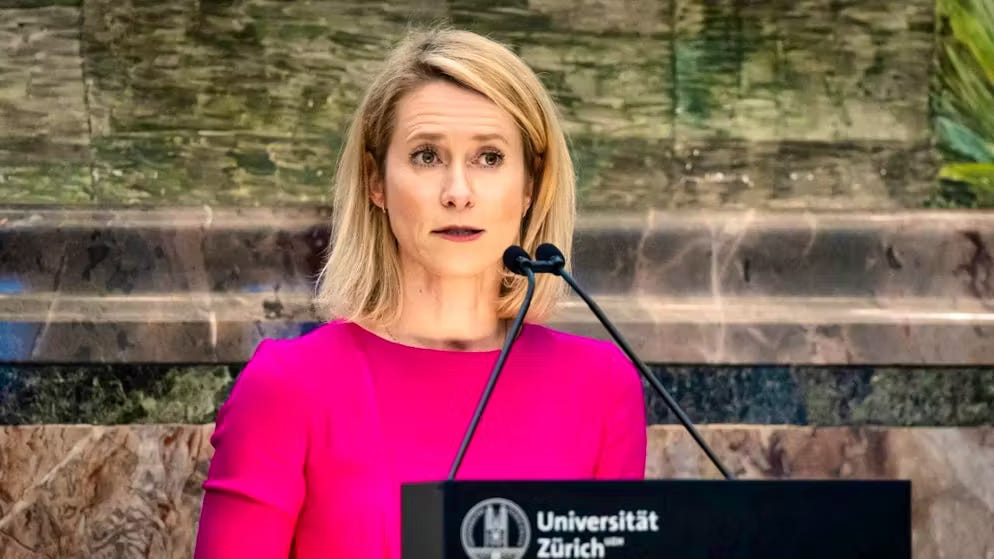
And at the University of Zurich on Thursday, European Commission Vice-President and High Representative for Foreign Affairs and Security Kaja Kallas met with Swiss Foreign Minister Ignazio Cassis and Defence Minister Martin Pfister.
Together they signed a cooperation agreement that establishes regular exchanges on security and defence topics and helps coordinate Swiss participation in peacekeeping missions.
Kallas also gave an impassioned speech defending and promoting the “rules-based” international order. The speech marked the 80th anniversary of Winston Churchill’s famous speech - also held at the University of Zurich - calling for a unified Europe.
Money man in the shadows
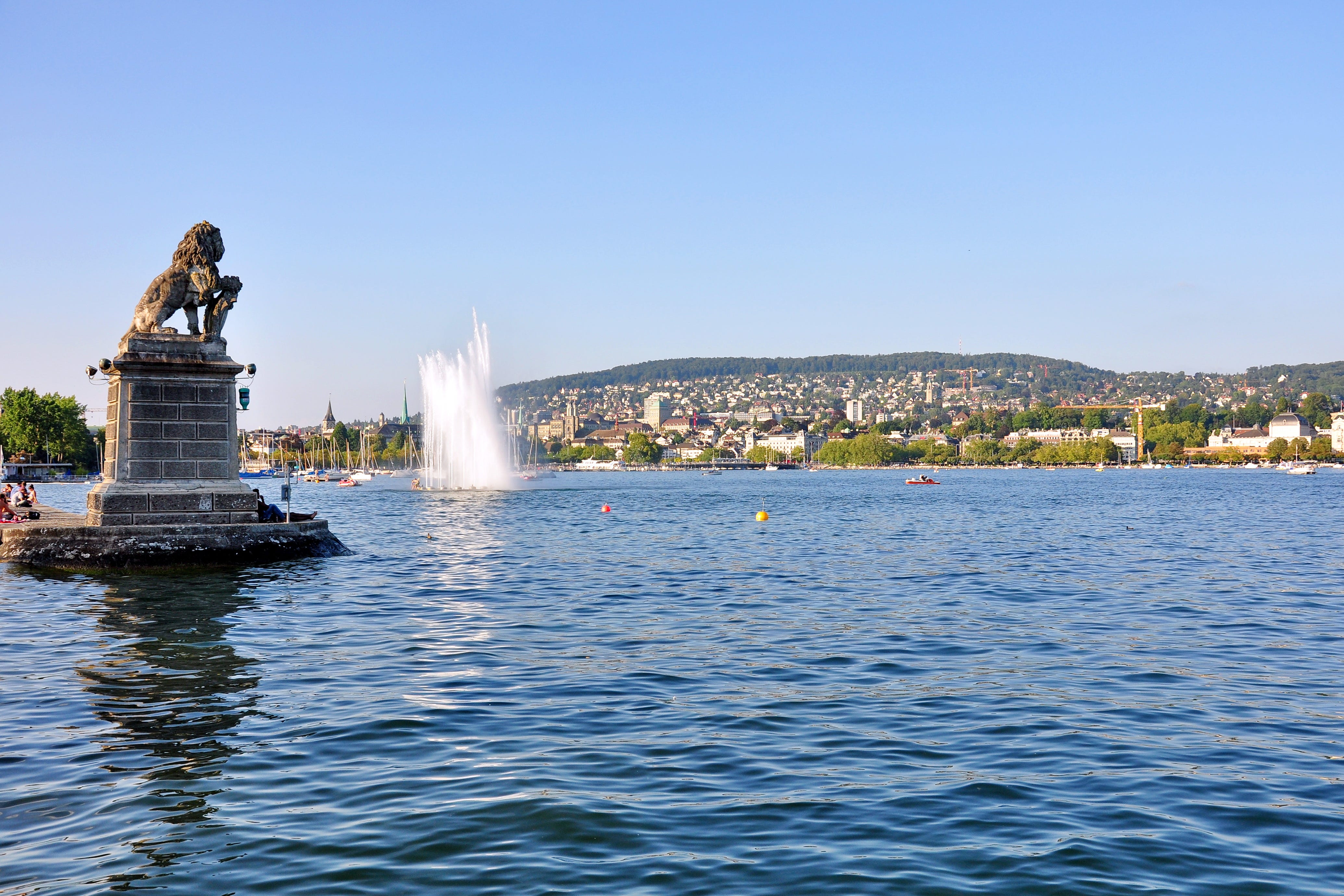
Zurich has shadowy owner - one that gives millions to political parties…very quietly.
Until now, the extent of his real estate empire has been unknown…
Henning Conle, an 82-year-old German-Swiss billionaire, has quietly amassed Zurich’s largest private real estate empire, owning 121 properties with 1,253 apartments across the city.
That is a total nearly 74,000 square meters of residential space and 105,000 square meters including commercial buildings.
His portfolio, concentrated in neighborhoods like Unterstrass, Schwamendingen, and Oerlikon, is estimated to be worth up to CHF 1.2 billion, generating monthly rental income of CHF 1.8–1.98 million.
Despite his vast holdings, Conle remains a shadowy figure, with no public photos and a reputation for extreme privacy, earning him nicknames like “the Phantom of Zürichberg.”
His properties, many acquired in the 1990s, are managed through family-linked firms such as the Miwo AG, where his son and the brother of a prominent SVP donor serve on the board.
Conle’s name has surfaced repeatedly in connection with covert political financing.
Investigations by German and Swiss media allege he funneled millions in undisclosed donations to Germany’s far-right AfD party, including a €2.35 million campaign for Alice Weidel in 2021 and earlier contributions in 2017.
In Switzerland, he has been linked to the right-wing Swiss People’s Party (SVP), with confirmed meetings between Conle and SVP politicians, including Bundesrat Albert Rösti.
While Conle’s legal team and associated companies decline to comment, his alleged use of Swiss and Austrian intermediaries—such as the Goal AG advertising agency—to channel funds has drawn scrutiny from regulators and anti-corruption groups.
Money - and power - in Switzerland remain very subtle…
How important is intelligence to you?💡
The Swiss Insider is dedicated to providing the most valuable insights on Switzerland - that means “you.”
❓ What angles/stories/reports do you find most valuable?
Leave me a comment below ⤵️
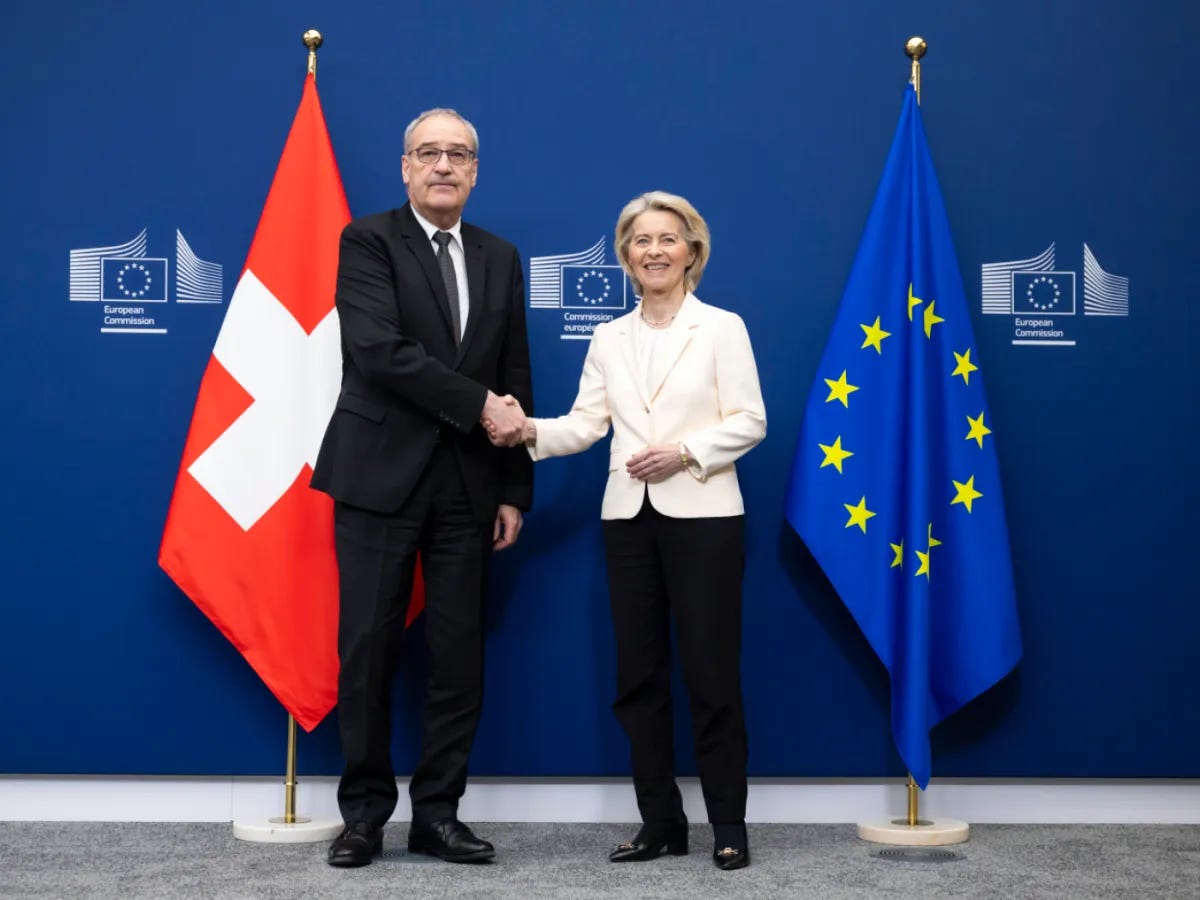
Teflon man - Guy Parmelin
Guy Parmelin, Switzerland’s twice-serving president, has cemented his reputation as the ultimate political survivor - once again.
This past week, he signed the contentious EU treaty package this week, despite howls of protest from his own Swiss People’s Party (SVP).
While SVP activists staged a dramatic demonstration in Bern, complete with prop halberds and apocalyptic rhetoric, Parmelin proceeded with the ceremony in Brussels, his black tie the only hint of dissent.
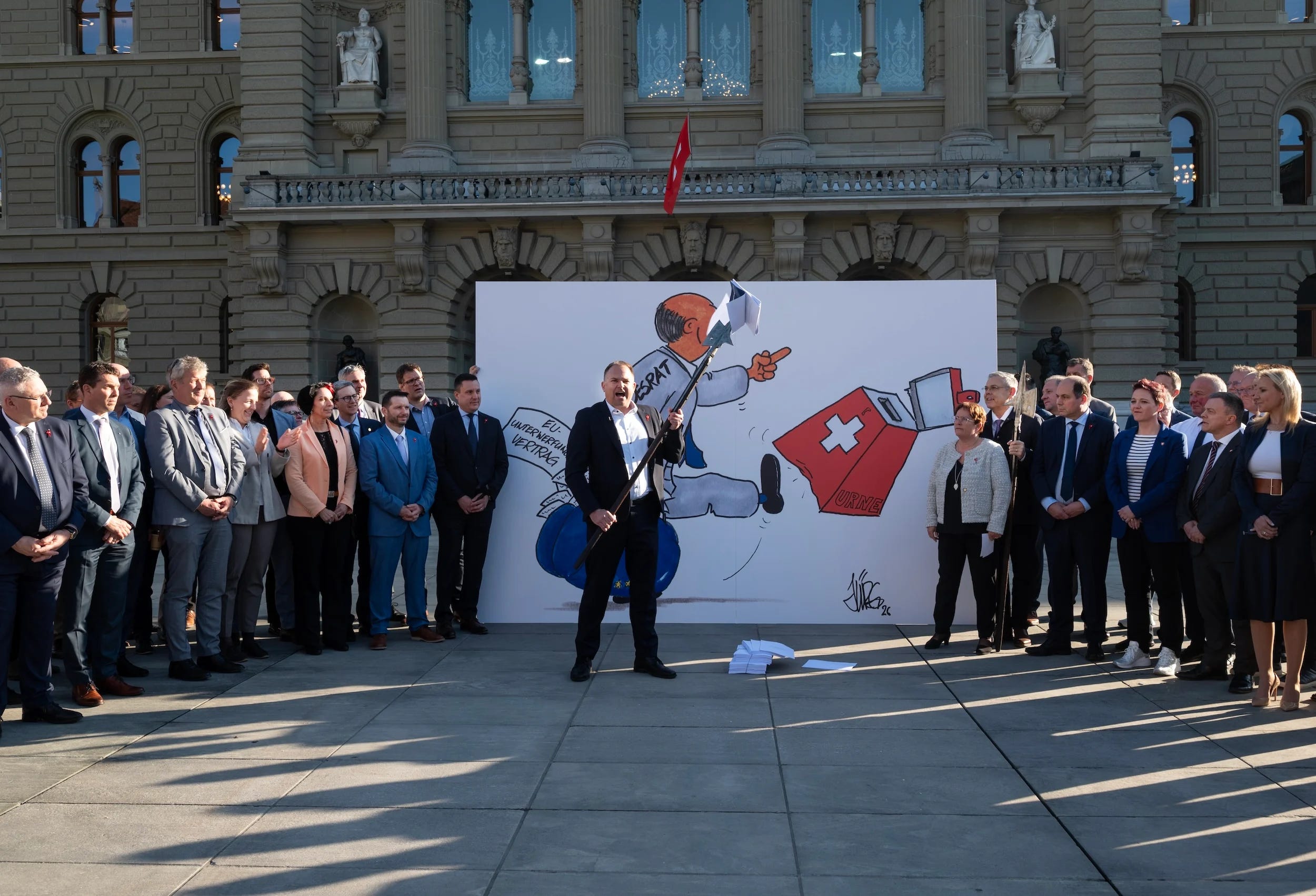
A master of institutional loyalty over partisan conflict, he has long prioritized the Federal Council’s consensus over his party’s eurosceptic fervor, even as the SVP brands the agreements as a betrayal of Swiss sovereignty.
Parmelin’s pragmatism serves as a “shield” - and a Swiss hallmark.
Once an EEA supporter turned critic, he now embodies the Swiss tradition of administrative stoicism, absorbing criticism without cracking.
The public remains split—some decry the deals as a surrender of neutrality, others hail them as economic necessity.
But the final verdict rests with Swiss voters.
For now, Parmelin’s quiet resolve leaves him untouched by the fury. It is a quality he demonstrated in full measure as well during the recent struggle with Donald Trump and the US’s tariff policy.
While he personally may avoid any “Father of the Nation” title, Parmelin stands out as a near-perfect representation of the quintessential Swiss pragmatician.
Feet on the ground
Is Swiss footwear giant “ON track”?
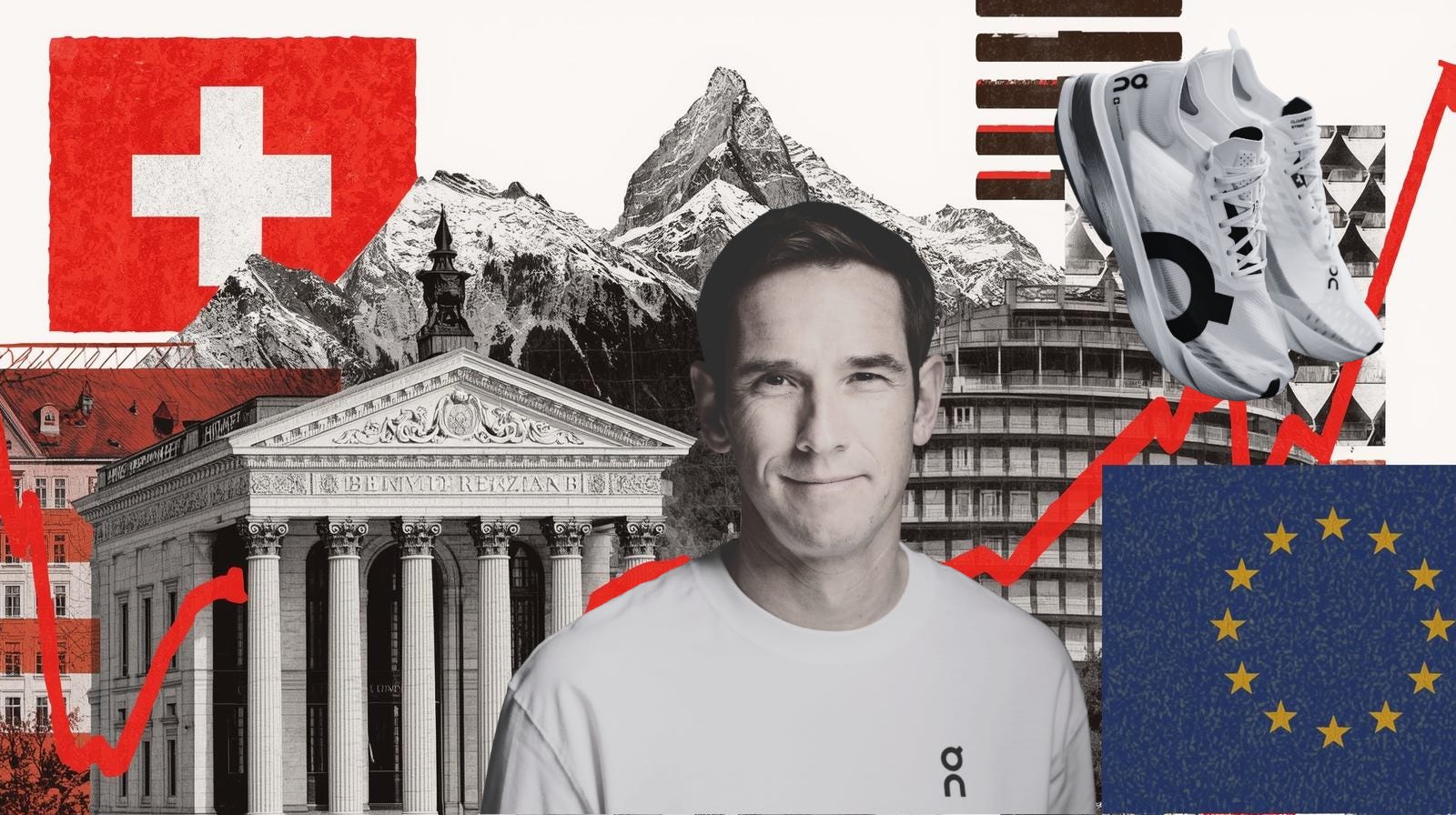
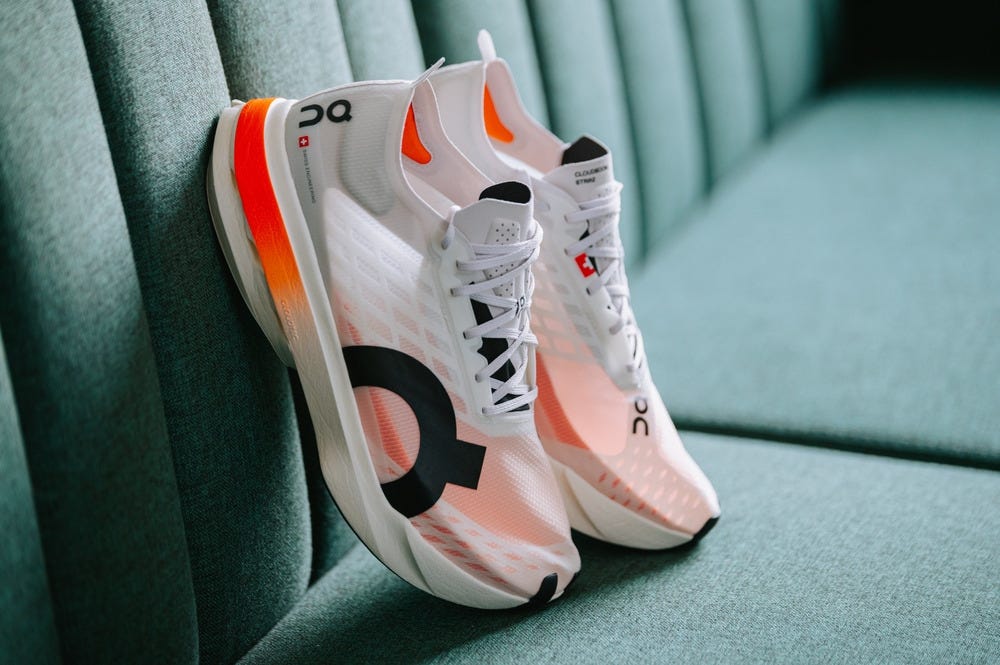
In its 15th year, On Running has become one of Switzerland’s most remarkable corporate stories.
The Zurich-based sneaker firm crossed CHF 3 billion in revenue for the first time in 2025, growing 30% year-on-year. Asia-Pacific nearly doubled to CHF 511 million.
Apparel and accessories — still small in absolute terms — surged by 68% and 124% respectively.
The recipe has been deliberate:
Fewer discounts
More direct-to-consumer sales
Relentless brand positioning at the premium end.
EBITDA margins rose to 18.8%, and On is forecasting at least 23% currency-adjusted growth again in 2026. Roger Federer, a prominent investor, can keep smiling.
Yet beneath the headline numbers, some cracks are showing.
Net profit actually fell 16% in 2025, dragged down by the strong franc — a perennial Swiss affliction. And shareholders receive no dividend.
And the stock lost around 15% over the course of last year, with a further 6% decline so far in 2026.
For a company that markets itself as a premium proposition, the share price tells a less flattering story.
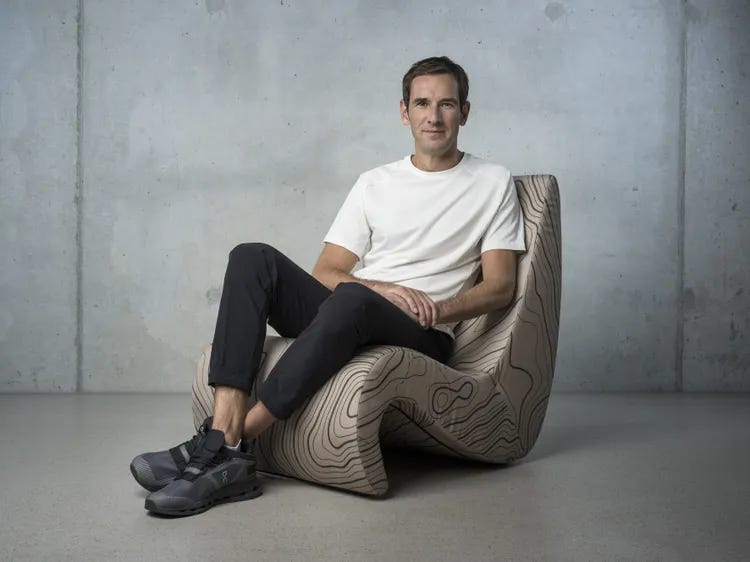
The most eyebrow-raising figure, however, sits in the annual report:
CEO Martin Hoffmann’s total compensation jumped 242% to nearly CHF 10 million.
That puts him level with the chiefs of Zurich Insurance and Roche — companies managing vastly more revenue, profit, and headcount.
Hoffmann’s pay amounts to 4.8% of On’s entire net profit; the full executive team claims over 11%.
One can admire the growth without quite believing the boss deserves a pay packet to match.
And then there is geopolitics.
On’s US subsidiary has joined a legal action to reclaim Trump-era tariffs, following a US Supreme Court ruling that deemed them unlawful.
The sums at stake are not disclosed, but the episode is a reminder of how exposed On’s growth model is to American politics — the Americas account for nearly 58% of revenues. Sprinting ahead is impressive.
The terrain, however, is getting bumpier.
A chart is worth…
E-commerce is big in Switzerland…although some companies are growing more than others.
And more…
🚨 Residence renegades - Swiss residency rules face scrutiny after Europe’s drug crackdown revealed suspected ‘Ndrangheta members legally lived in the small Swiss town of Roveredo despite prior criminal evaluations. (Link)
📀 Quantum hub - Switzerland’s Swiss Quantum Strategy calls for a new international quantum technology hub, supported by CHF 200-300 million in public funding and focused on building specialized infrastructure to boost research, innovation, and global collaboration. (Link)
✚ Saving the cross - Swiss lawmakers narrowly voted to save federal funding for Geneva’s International Red Cross and Red Crescent Museum, allocating CHF200,000 annually after a heated debate. (Link)
👎🏻 No thanks - In Canton Aargau, only one out of 2,500 eligible people voluntarily joins the civil protection service, highlighting a severe recruitment crisis. (Link)